Shields of the Airborne foundation
A one-page site with its own admin panelA password-protected page where you change texts, prices and photos yourself — no code, no us. the foundation runs itself: a live fundraiser, photo reports, zero monthly fees.
The brief
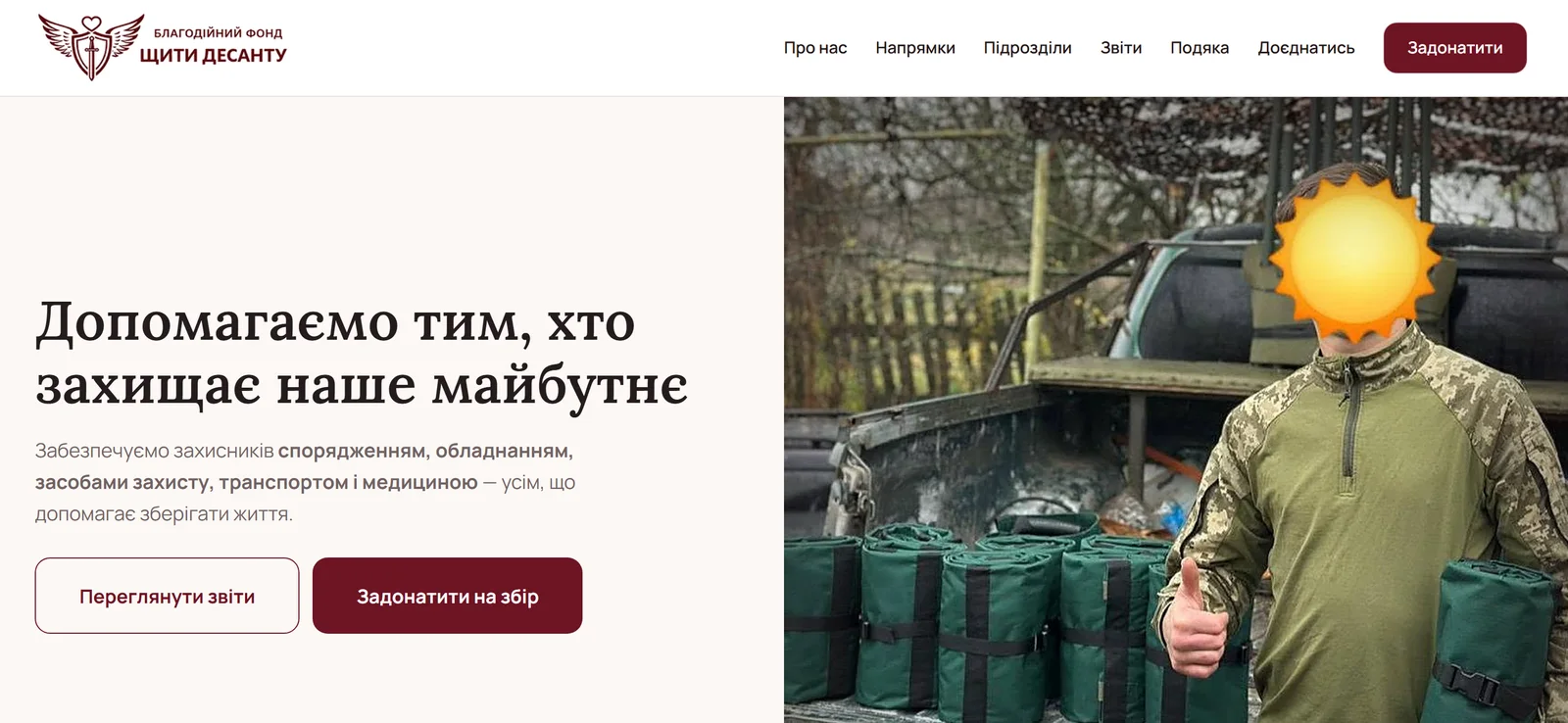
The foundation has been supplying Ukrainian army units since 2022, but had no website — fundraisers lived in Telegram. It needed a place you can bring a person who sees the foundation for the first time and is deciding whether to trust it with money. And the foundation had to run it alone: there is no developer and no content manager on the team.
What we did
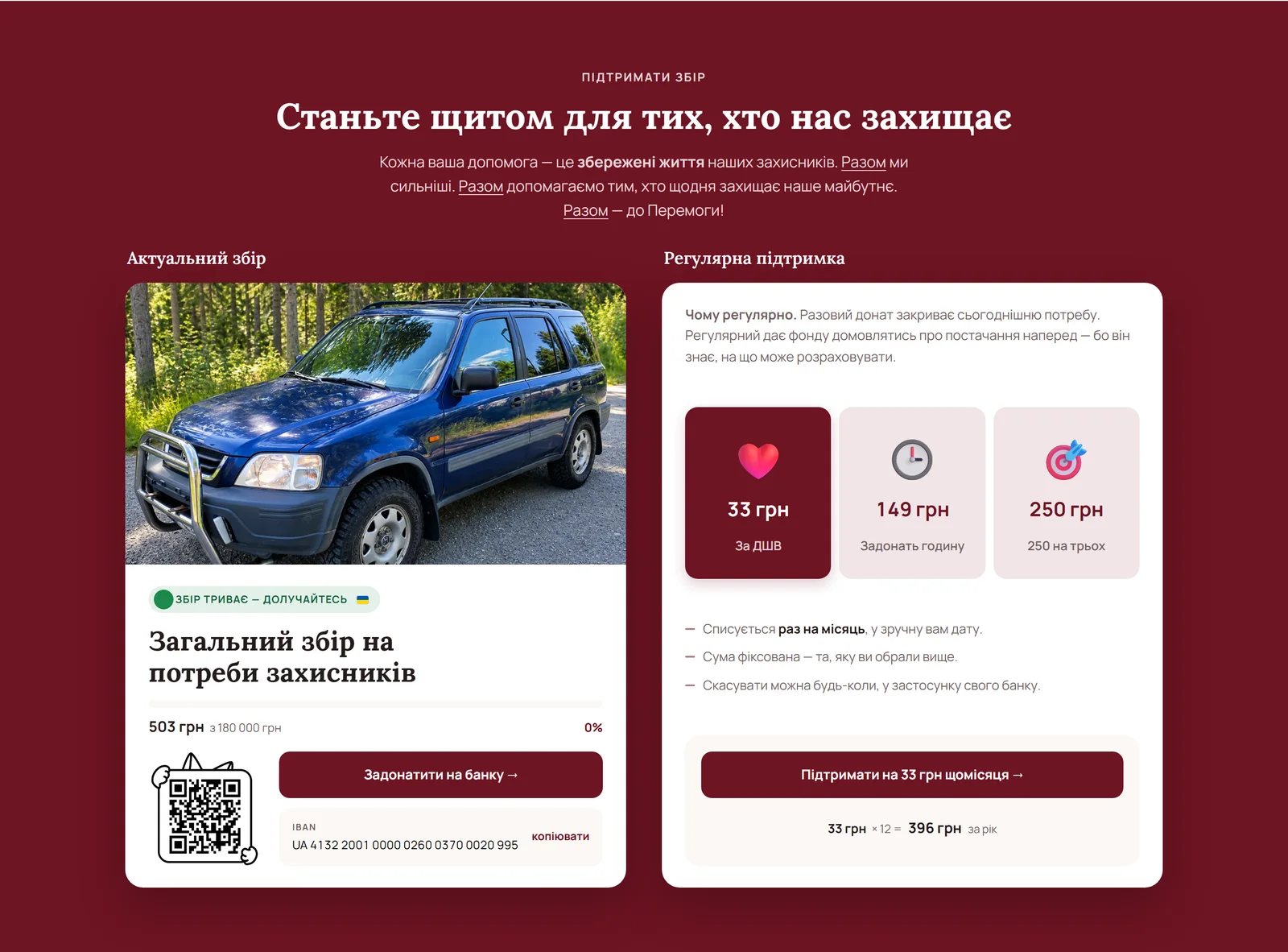
- Studied how 12 trusted foundations — 7 Ukrainian, 5 international — show their reporting. PDFs and spreadsheets lead people away from the site; trust is built by a live fundraiser with the amount right on the page and photos of deliveries.
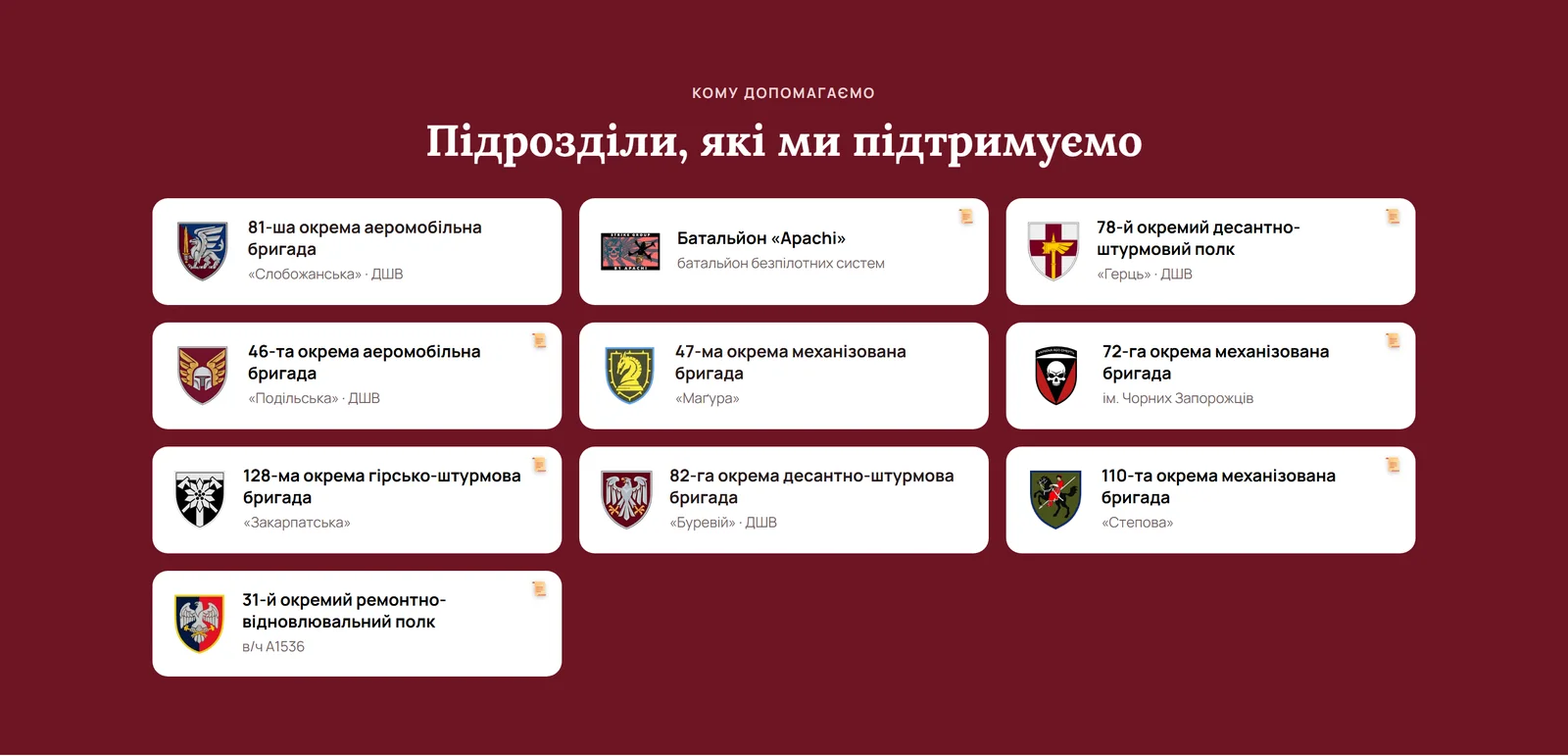
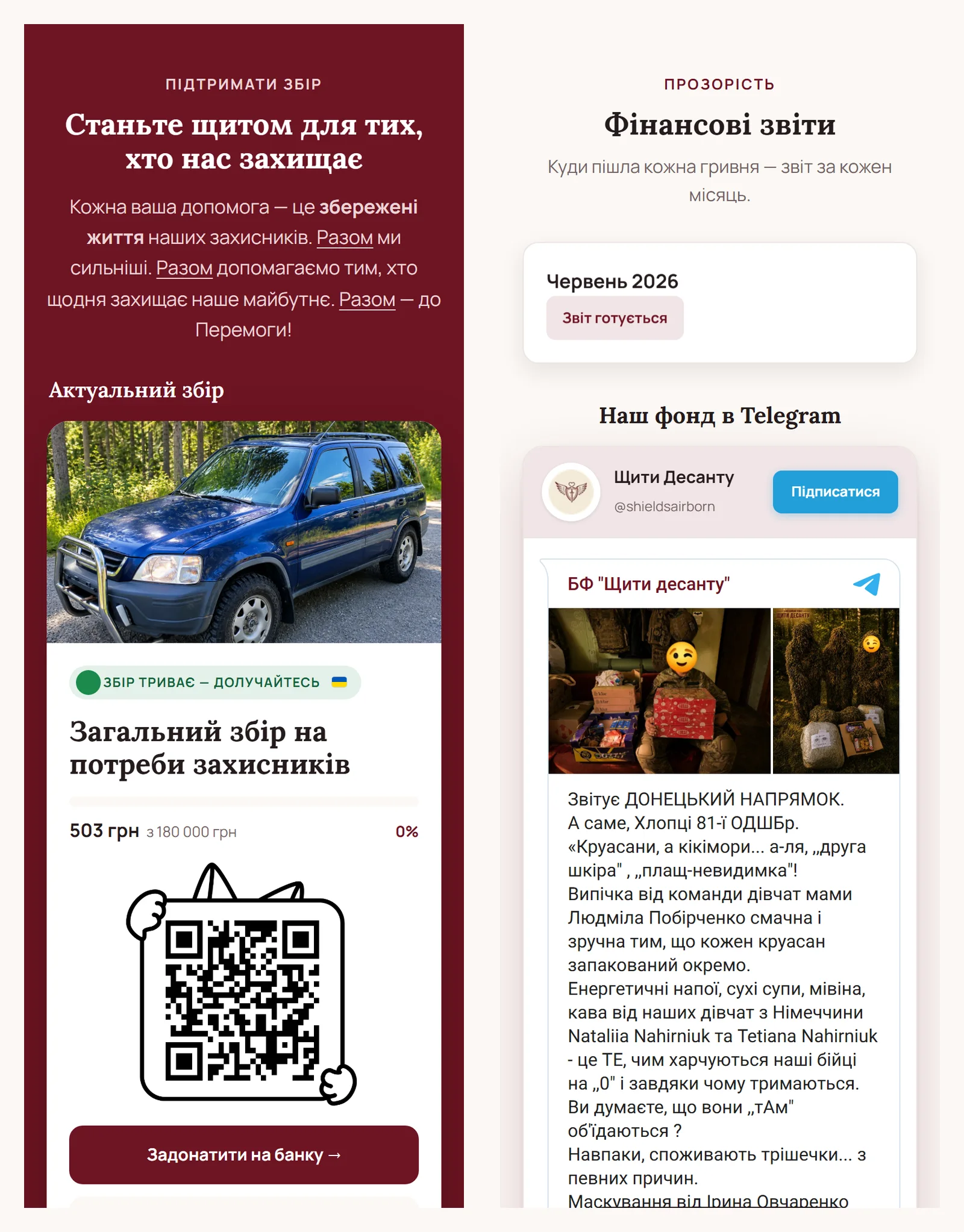
- Designed and built a one-page site: the fundraiser with a recurring-support calculator, aid directions, ten army units with their insignia, thank-you letters, a gallery.
- Built a custom admin panelA password-protected page where you change texts, prices and photos yourself — no code, no us. on Cloudflare Workers: seven sections the foundation edits itself — texts, amounts, units, gallery, letters.
- Cut the weight: 2570 → 884 KB, PageSpeedGoogle’s free speed meter. We show you the result on screen instead of describing it. 57 → 80, full load 0.8 s — 1.5× faster than comparable foundation sites.
- Launched with no monthly fees at all: free hostingWhere the site physically lives. A static site costs nothing; a server with a database starts at 1,200 UAH a year, billed to you directly., the domainThe address people type in the browser. Registered in your name, paid separately. and accounts belong to the foundation.
Nobody takes a foundation at its word
A person about to send money to an unfamiliar foundation asks one question: where does it go and can we check. Not “what is your mission” — but is it visible what has been done, and does it match the amounts. So the site is built not around a story about the foundation but around evidence: fundraisers with photo reports, amounts, dates. And the foundation maintains it all itself — no developer, no invoice for every edit.
A custom admin panel, not WordPress
There is nobody at the foundation to maintain a site, and WordPress is a core, a theme and plugins, each with its own updates and vulnerabilities. A missed update on a site that collects money is not a cosmetic problem. In this panelA password-protected page where you change texts, prices and photos yourself — no code, no us. there is nothing to update: no plugins, no themes, no third-party code. And the fields are custom anyway — units with insignia, a live fundraiser, thank-you letters: in WordPress that would be the same development work on top of an extra layer.
If the foundation needed a blog with several editors and a stream of posts — we would have picked WordPress. It needs neither.
The find: one character weighed 50 KB
Fonts were 72 % of the page weight. The breakdown showed the browser pulled three extra files because of a single character used once — the hryvnia sign ₴, which falls into two Unicode ranges at once. Replaced it with the word “hrn” — three files gone. Without measuring you would never see it, and it costs as much as a whole section of the site.
How the project went
Taken on July 5, the site was ready July 30 — ahead of the deadline the client asked for. The materials kept arriving until August 8: photos, texts and payment details came in waves, because the organisation itself was only going public. That was the whole point of the custom panelA password-protected page where you change texts, prices and photos yourself — no code, no us. — when materials come in waves, no edit should wait for a developer.